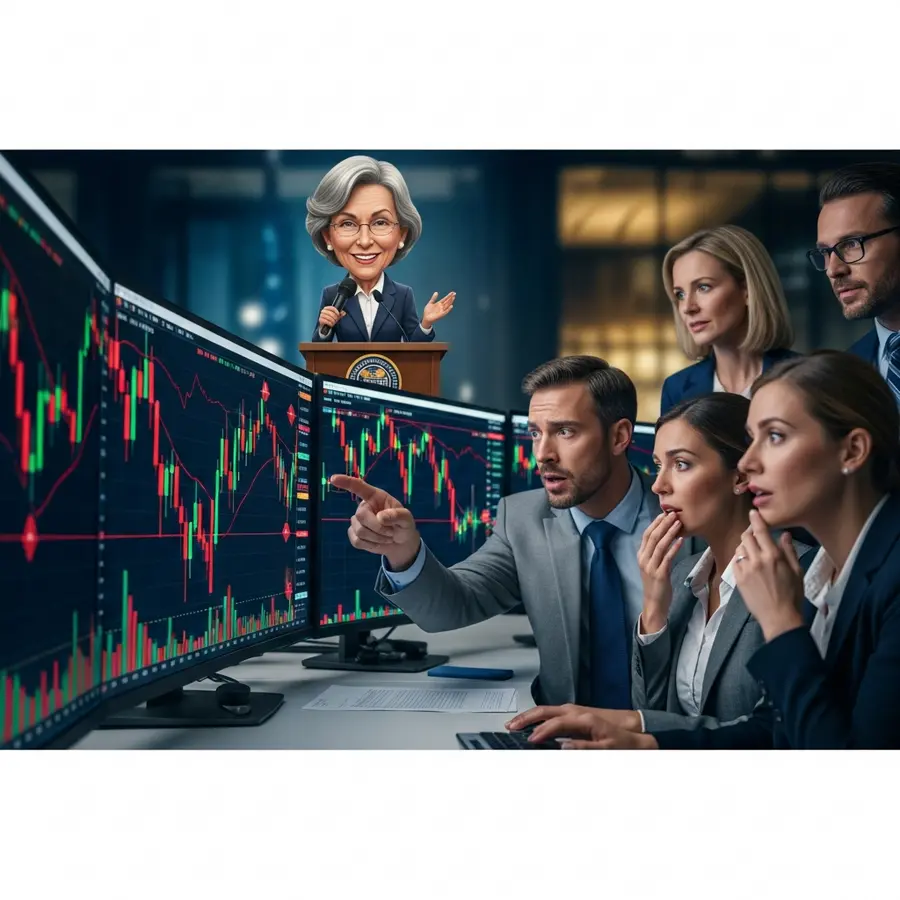
The Federal Reserve delivered a hawkish interest rate hike on September 16, 2026, driving two-year U.S. Treasury yields to their highest level since July 2024 and sending global equity futures into a sharp decline. The monetary tightening decision caught portions of the market off-guard, forcing a rapid repricing of short-term interest rate expectations across asset classes. For retail foreign exchange and index futures traders, the sudden surge in fixed-income yields has reignited volatility and established a definitive hawkish backdrop for upcoming trading sessions.
Key takeaways
- The Federal Reserve announced a hawkish interest rate increase on September 16, 2026, defying market assumptions of monetary easing.
- Two-year U.S. Treasury yields surged to their highest point since July 2024 as market participants aggressively repriced terminal rate expectations.
- Equity futures contracts and global stock indices fell sharply across Asian, European, and North American trading sessions following the decision.
- Foreign exchange markets experienced elevated volatility, with the U.S. Dollar strengthening significantly against major currency pairs.
What happened in the Federal Reserve interest rate decision
On September 16, 2026, the Federal Reserve concluded its monetary policy meeting by delivering an unexpected hawkish interest rate hike. Financial market reporting from Investing.com confirmed that short-term U.S. sovereign debt reacted immediately to the policy announcement, pushing two-year U.S. Treasury yields upward to levels not recorded since July 2024.
Equity benchmark futures fell rapidly as central bank officials signaled a firm commitment to maintaining tight financial conditions. Market coverage across financial media noted that Asian markets made a nervous start ahead of the rate decision, setting up a broad sell-off once official confirmation reached institutional trading desks. The sharp movement in two-year yields—the benchmark most sensitive to immediate Fed monetary policy shifts—underlined the hawkish tone of the central bank's stance.
The hawkish outcome contrasts sharply with previous market sentiment that had priced in potential monetary easing, such as earlier dovish Federal Reserve expectations. The swift transition from neutral-to-easing assumptions to active rate hikes generated immediate liquidity friction across futures order books and currency venues.
Why the Treasury yield surge matters for FX and futures traders
The spike in two-year U.S. Treasury yields to multi-year highs directly alters financial asset valuations across multiple markets. Short-term sovereign yields dictate discount rates for equities and benchmark currency yield differentials. When two-year yields push toward multi-month highs, institutional capital moves rapidly out of high-beta equity futures and into cash or short-duration fixed-income instruments.
For index futures traders holding positions in the E-mini S&P 500, Nasdaq 100, or Dow Jones futures, the Fed decision introduced elevated intraday execution risks. Hawkish central bank policy expands intraday trading ranges, increasing the likelihood of slippage during peak liquidity events. Prop traders operating under strict daily drawdown rules across evaluated accounts must take note of widened bid-ask spreads during major macro releases.
In foreign exchange markets, rising U.S. Treasury yields strengthen the fundamental backing of the U.S. Dollar. Currency pairs such as EUR/USD and GBP/USD faced immediate downward pressure, while USD/JPY surged as interest rate differentials between the Federal Reserve and foreign monetary authorities expanded further. Funded traders managing challenge accounts through major futures prop firms or comparing evaluation parameters across cheapest futures prop challenges need to adapt risk models to reflect higher structural volatility in major currency pairs.
What to watch next across session trading
In the aftermath of the Federal Reserve rate decision, traders should closely monitor follow-through price action in two-year U.S. Treasury yields and institutional positioning in the fixed-income market. If two-year yields sustain their levels above prior multi-month resistance, equity futures will likely remain under structural overhead pressure during European and New York trading hours.
Market participants should also track upcoming communications from FOMC members and subsequent inflation releases. Any secondary speeches reinforcing the central bank's aggressive stance will solidify the dollar's yield advantage. For additional background on central bank strategy shifts, review earlier Jackson Hole market commentary examining long-term monetary framework discussions.
Frequently asked questions
Why did two-year U.S. Treasury yields react so strongly to the Federal Reserve rate hike?
Two-year U.S. Treasury yields are uniquely sensitive to short-term Federal Reserve monetary policy. When the central bank delivers a hawkish interest rate hike, short-duration yields instantly adjust higher to reflect elevated borrowing costs over the coming months, driving the benchmark yield to its highest point since July 2024.
How does a hawkish Federal Reserve rate hike impact funded futures traders?
A hawkish Federal Reserve rate hike increases intraday market volatility and broadens trading ranges across stock index futures. Funded futures traders face heightened risk from sudden order-book illiquidity, price gaps, and rapid directional shifts that can breach strict daily account drawdown limits.
What effect does higher U.S. yield structure have on foreign exchange pairs?
Higher U.S. Treasury yields expand interest rate differentials in favor of the United States Dollar. As short-term U.S. yields rise relative to foreign benchmarks, capital flows into dollar-denominated assets, exerting upward pressure on the U.S. Dollar against major currency rivals like the Euro, British Pound, and Japanese Yen.
Trading carries a substantial risk of loss; past performance and prior market reactions do not guarantee future results. This is market commentary, not advice.