On August 5, 2026, Iran's president stated that establishing contact with the country's Supreme Leader has become "very difficult," according to Investing.com. This unprecedented public admission of a communications breakdown at the absolute top of the Iranian government injects severe uncertainty into global markets, immediately forcing traders to reprice geopolitical risk across crude oil futures and safe-haven currencies.
Key takeaways
- Iran's president confirmed severe difficulties in contacting the country's Supreme Leader on August 5, 2026.
- The disruption in the Iranian command-and-control structure drastically spikes the geopolitical risk premium on energy futures.
- Forex markets are seeing a rapid rotation into the US Dollar and Swiss Franc as risk-off sentiment takes hold.
- Traders are actively hedging against uncoordinated military actions in key Middle Eastern maritime transit choke points.
The leadership communications breakdown
According to Investing.com, Iran's president made a startling admission on August 5, 2026, revealing that maintaining contact with the Supreme Leader is currently "very difficult." Because the Supreme Leader holds ultimate authority over Iran's armed forces, foreign policy, and nuclear programs, any disruption in the Supreme Leader's ability to communicate creates a massive void in the nation's command structure. While the precise reason for this breakdown remains undisclosed, the timing presents a critical catalyst for global markets. A communications blackout at the highest echelon of the Iranian state effectively freezes diplomatic backchannels and raises the probability of fragmented decision-making by subordinate military commanders. For global markets attempting to price in regional stability, the loss of a definitive, centralized voice from Tehran removes a crucial anchor of predictability.
Why traders are repricing Middle East risk
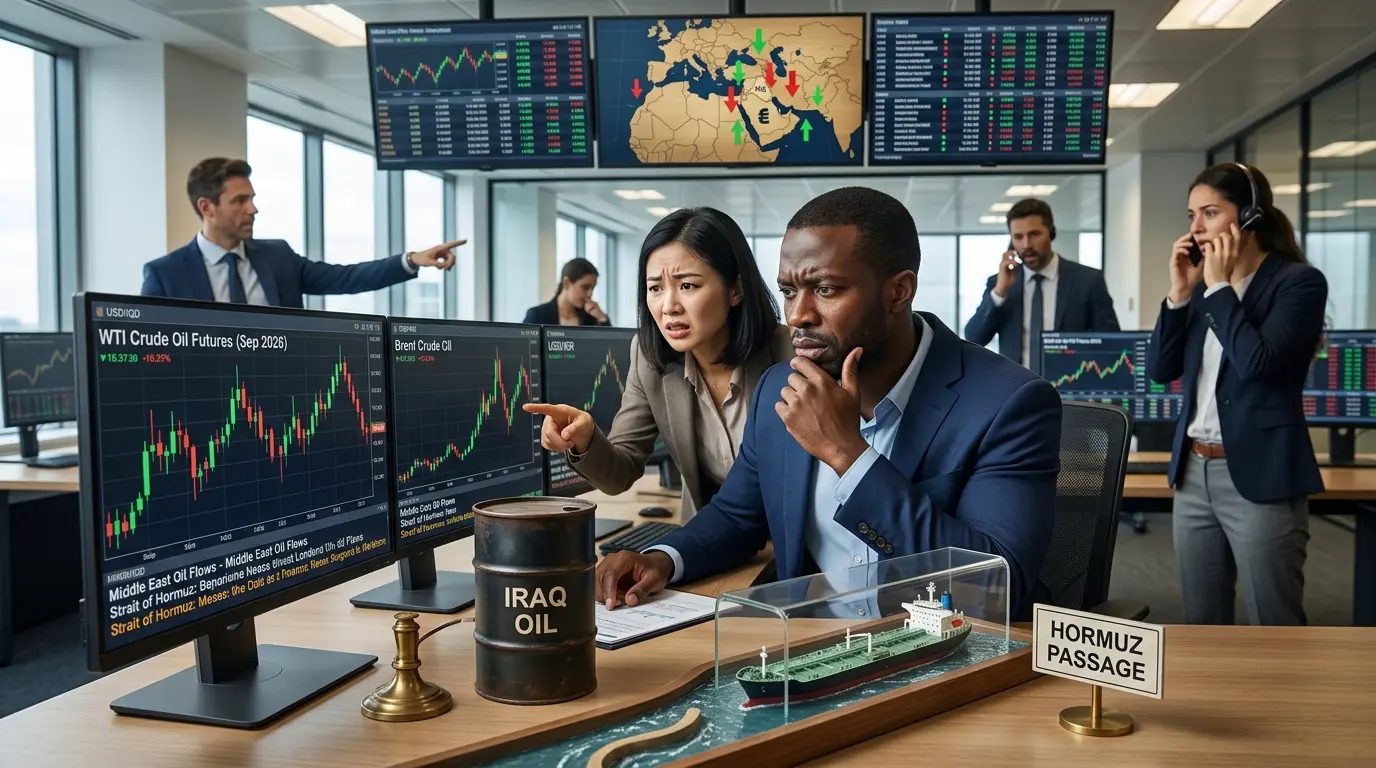
The implications for energy and currency markets are immediate and structural. In the futures markets, crude oil contracts are highly sensitive to any friction in the Middle East. When the chain of command in a major regional military power becomes opaque, algorithmic and institutional traders instinctively bid up the geopolitical risk premium. Without clear oversight from the Supreme Leader, the futures market must price in the tail risk of unauthorized or uncoordinated actions by proxy groups or naval forces in the Strait of Hormuz, a critical maritime choke point for global energy supplies.
Furthermore, this leadership uncertainty acts as a potent catalyst for safe-haven flows in the forex market. Currency traders are rapidly unwinding carry trades and rotating capital into the US Dollar (USD), the Swiss Franc (CHF), and the Japanese Yen (JPY). This aggressive risk-off posturing builds on the recent price action driven by the escalating US-Iran conflict. When geopolitical clarity vanishes, liquidity becomes the primary objective for large institutions. The US Dollar, backed by the depth of the Treasury market, is the default destination for capital fleeing Middle Eastern instability.
Consequently, traders should anticipate elevated volatility in major currency pairs, particularly as European markets digest the potential fallout. The European Central Bank has closely monitored regional stability, as potential escalations threaten to impact eurozone consumption. A prolonged silence from Iran's highest office will only accelerate this flight to safety.
What to watch next
The immediate focus for traders shifts to official Iranian state broadcasting channels for any formal decrees, proof-of-life appearances, or statements from the Supreme Leader's inner circle. In the interim, futures traders must monitor the front-month Brent and West Texas Intermediate (WTI) crude contracts for sudden liquidity vacuums or price gaps, particularly during the Asian transition into the European trading session. Additionally, watch the gold futures market; bullion typically catches a secondary bid if the initial rush into the US Dollar begins to stabilize but underlying geopolitical anxieties remain unresolved. Finally, traders must keep a close watch on implied volatility metrics across major energy derivatives, as market makers will drastically widen spreads to protect against headline risks out of Tehran.
Frequently asked questions
How does command uncertainty in Iran affect global energy markets?
Uncertainty at the top of Iran's political and military structure drastically increases the geopolitical risk premium on energy. Futures traders fear that a fractured chain of command elevates the likelihood of uncoordinated military actions or localized disruptions in the Strait of Hormuz, threatening a significant portion of the world's seaborne oil supply.
Which forex pairs are the most vulnerable to Middle East geopolitical shocks?
Pairs involving the US Dollar, Swiss Franc, and Japanese Yen are highly reactive to geopolitical shocks. When risk appetite collapses due to leadership uncertainty in the Middle East, traders aggressively buy these safe-haven currencies, often driving sudden depreciations in risk-correlated assets like the Australian Dollar or emerging market currencies.
Why do gold futures react to Iranian leadership news?
Gold is a traditional non-yielding safe-haven asset. When geopolitical instability strikes, particularly involving a major regional power like Iran, institutional traders often allocate capital into gold futures to hedge against the potential inflationary impacts of an oil price spike and the general degradation of global diplomatic stability.
Trading carries a substantial risk of loss; past performance and prior market reactions do not guarantee future results. This is market commentary, not advice.