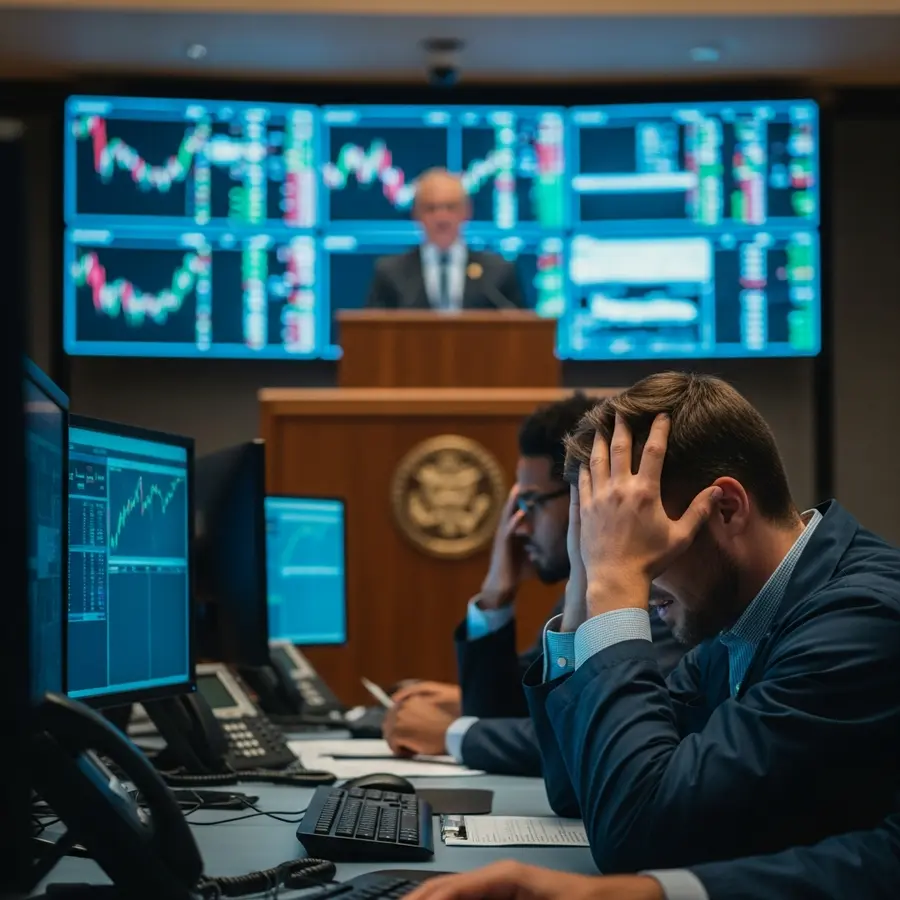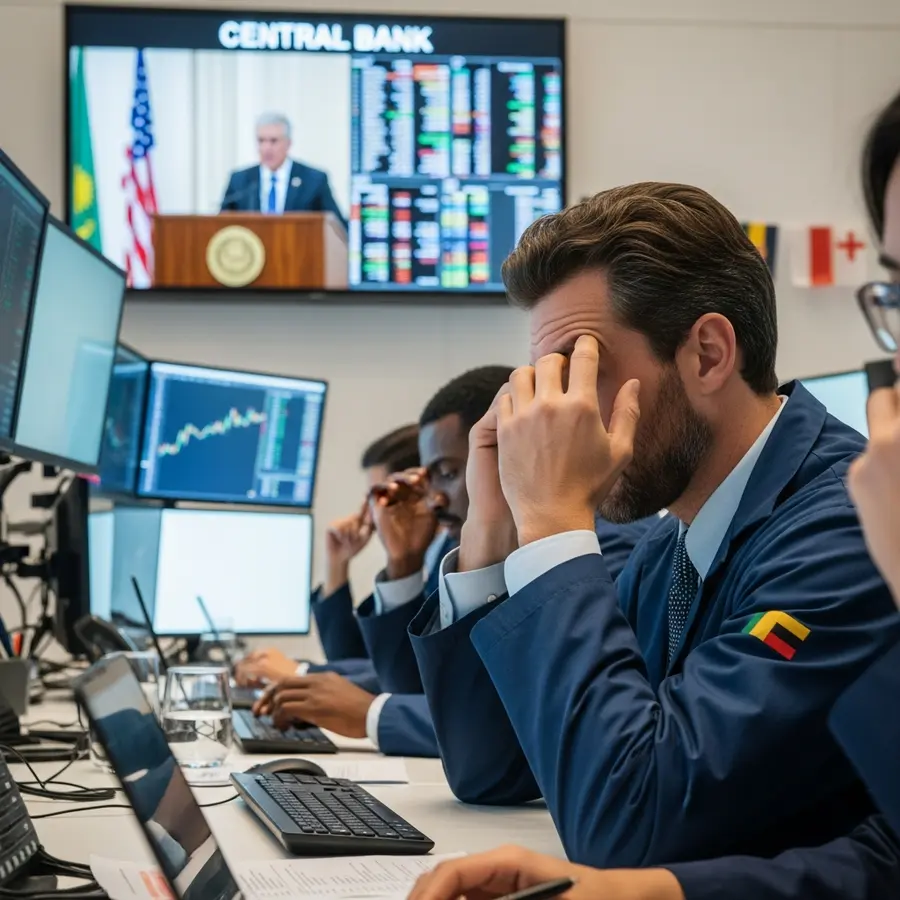
On August 4, 2026, critics challenged new Federal Reserve Chair Kevin Warsh and his White House allies over a lack of a clear strategy to bring down inflation, with allies arguing that markets are simply in a "detox" from excessive forward guidance. For forex and futures traders, this deliberate shift away from telegraphed central bank policy means an immediate repricing of risk, as the decade-long era of spoon-fed monetary roadmaps comes to an abrupt end.
Key takeaways
- Critics argue that Federal Reserve Chair Kevin Warsh’s stated determination to cool price gains is insufficient without a concrete policy roadmap.
- White House allies have defended the central bank's silence, characterizing the current market unease as a necessary "detox" from prior Federal Reserve guidance.
- The structural shift away from explicit forward guidance forces market participants to rely strictly on raw economic data rather than central bank telegraphing.
- Currency and bond markets face structurally higher volatility as the predictable policy paths traders previously relied upon are systematically dismantled.
The end of the roadmap: What happened
According to a report by MarketWatch published on August 4, 2026, the new leadership at the Federal Reserve is facing mounting scrutiny over its approach to managing inflation. Critics have voiced concerns that Federal Reserve Chair Kevin Warsh’s determination to cool price gains is simply not sufficient to anchor market expectations. Rather than outlining a step-by-step plan to combat sticky inflation, Warsh and his White House allies are reportedly telling the market to stop asking for a detailed roadmap.
The defensive posture from the administration frames this not as a lack of strategy, but as a deliberate philosophical shift in central banking. As noted in the MarketWatch coverage, White House allies—prominently including Scott Bessent—are defending Warsh by arguing that financial markets are currently going through a "detox" from too much forward guidance.
For over a decade, Wall Street and retail traders alike were conditioned to expect highly detailed dot plots, explicit rate-path promises, and extensive hand-holding from the Federal Reserve. The transition to Warsh’s leadership marks a definitive break from that communication apparatus, replacing explicit promises with a deliberate and often frustrating opacity.
Why the "guidance detox" matters for traders
This is a profound mechanical shift for anyone trading the US Dollar, Treasury futures, or major equity indices. The concept of a "forward guidance detox" means that the central bank will no longer act as a shock absorber ahead of major macroeconomic data releases. Without the Federal Reserve pre-emptively smoothing expectations, the entirety of the market's reaction function falls squarely on the actual data prints versus baseline forecasts.
Historically, if inflation came in hot, the Federal Reserve would use scheduled speeches and press conferences to temper the market's reaction by telegraphing their next move. Under Warsh, the absence of this guidance means that every basis point of inflation data will be priced into the bond market instantly and violently. This dynamic has already forced traders to heavily monitor surging Treasury yields under Fed Chair Warsh, as the bond market acts as the primary clearinghouse for ongoing policy uncertainty.
For forex traders, the baseline volatility of the US Dollar is set to expand significantly. Without a rigid framework of expected rate cuts or hikes to anchor the greenback, currency pairs like EUR/USD and USD/JPY will become hyper-sensitive to session-by-session economic prints. The White House's involvement also adds a complex layer of political friction. With allies actively defending the Federal Reserve Chair's silence, traders are weighing the potential impact of White House pressure on the Federal Reserve against the central bank's fundamental mandate to control prices.
Furthermore, this communication detox forces prop-firm challenge traders and retail participants to aggressively adjust their risk parameters. If the Federal Reserve is no longer telegraphing its moves, the gap risk over weekend holds and major data releases increases exponentially. The market is effectively trading blindfolded, meaning the risk premium attached to holding positions through Consumer Price Index (CPI) or Non-Farm Payroll (NFP) prints must widen. This aligns with broader market movements where participants are already repricing the Fed and its ultimate trajectory.
What to watch next
Attention now pivots entirely to raw macroeconomic data, discarding the previous playbook of trading off central bank commentary. The next US CPI print will serve as a critical test of this detox environment. If inflation unexpectedly accelerates, the market will be forced to guess Warsh’s reaction function without the benefit of prior speeches, likely leading to severe intraday swings in S&P 500 futures and the US Dollar Index. Additionally, the Treasury yield curve remains a critical gauge of distress, as the bond market attempts to price in a monetary policy path that the central bank refuses to articulate.
Frequently asked questions
What does a "forward guidance detox" mean for the markets?
A forward guidance detox refers to the Federal Reserve's deliberate decision to stop telegraphing its future interest rate moves. Instead of providing the market with a predictable roadmap, the central bank forces traders to rely entirely on incoming economic data, which naturally increases market volatility and uncertainty.
Why are critics challenging Fed Chair Kevin Warsh?
Critics argue that Kevin Warsh’s stated commitment to bringing down inflation is insufficient because it lacks a concrete, actionable plan. Market participants who are used to explicit central bank communication view this silence as a risk, fearing the Federal Reserve might fall behind the curve on managing price gains.
How does this policy shift impact futures and forex volatility?
Without the central bank acting as a communication shock absorber, baseline volatility across forex and futures markets structurally increases. Economic data releases like CPI or NFP will trigger sharper, more violent market reactions because traders no longer have a pre-communicated Federal Reserve baseline to anchor their expectations.
Trading carries a substantial risk of loss; past performance and prior market reactions do not guarantee future results. This is market commentary, not advice.